Crawl space water removal in Spring
If your Spring home is raised on piers, water can collect in the crawl space after a plumbing leak or a heavy storm. It often goes unnoticed until the floor feels soft or the house smells damp.
The crew pumps out standing water, pulls down soaked insulation, replaces damaged vapor barrier and runs drying equipment until the joists and subfloor test dry. Wet materials should be dried within 24 to 48 hours[EPA].
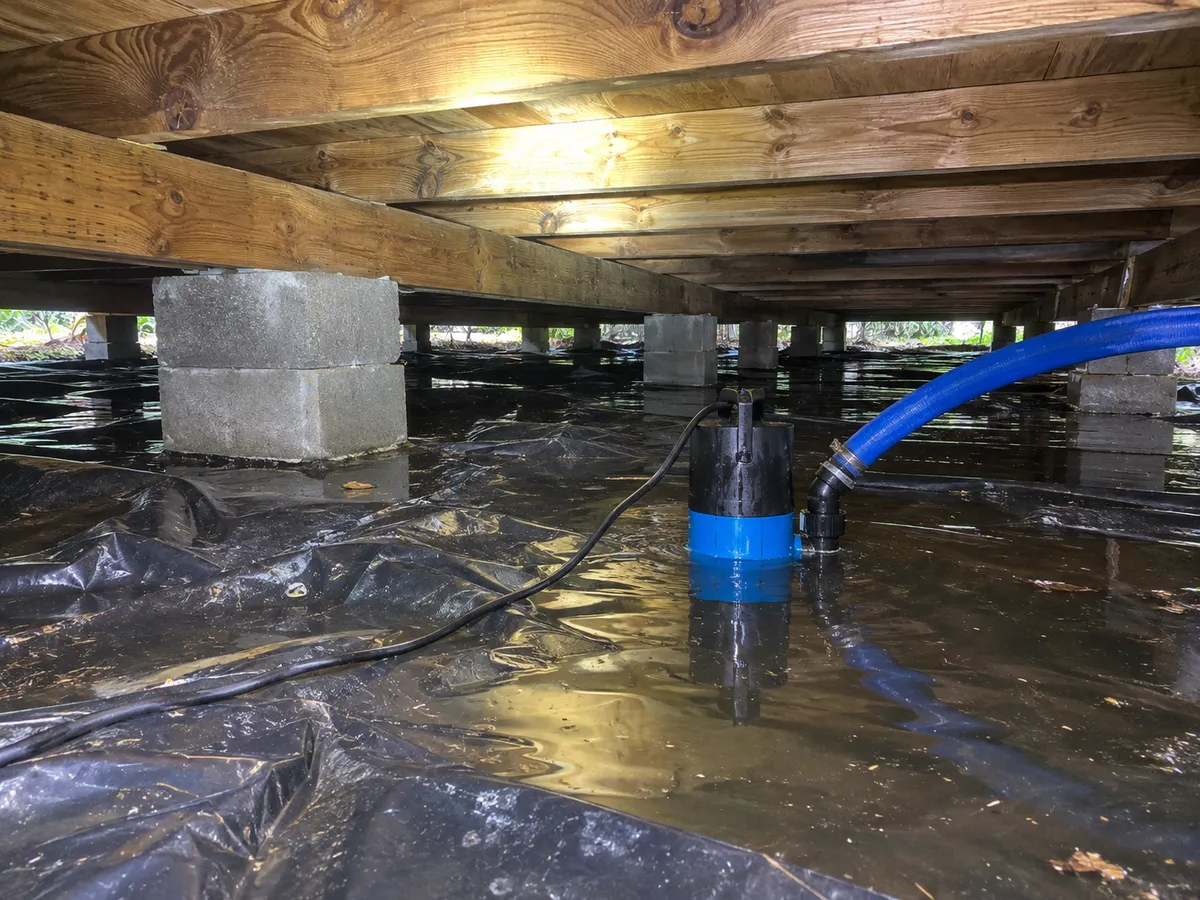
Step by step
- Find the source. Plumbing leak, drain line or surface water.
- Pump out. Submersible pump clears standing water.
- Remove wet materials. Insulation and vapor barrier that will not dry.
- Dry under the house. Dehumidifiers until readings show dry.
Do
- Turn off water if a plumbing leak is the source.
- Keep the crawl space access closed between visits.
Avoid
- Crawling into standing water near wiring[CDC].
- Leaving wet insulation hanging on the joists.
Crawl space water removal and Spring homes
Much of the housing is recent. 20% of homes in the Spring census-designated place were built in 2010 or later, with a median year built of 1993[U.S. Census Bureau]. Newer homes still have supply hoses, water heaters and drain lines that can fail.
During Hurricane Harvey, the National Weather Service logged 31.12 inches of rain at the 7.10 WSW Spring gauge between August 25 and 31, 2017[NWS Houston/Galveston].
More in Spring
Crawl space water removal nearby
- Crawl space water removal in Houston
- Crawl space water removal in Pearland
- Crawl space water removal in Rosharon
General guide: crawl space water removal explained.