Water under a raised Houston house
If your Houston home is raised on piers, water can collect in the crawl space after a plumbing leak or a heavy storm. It often goes unnoticed until the floor feels soft or the house smells damp.
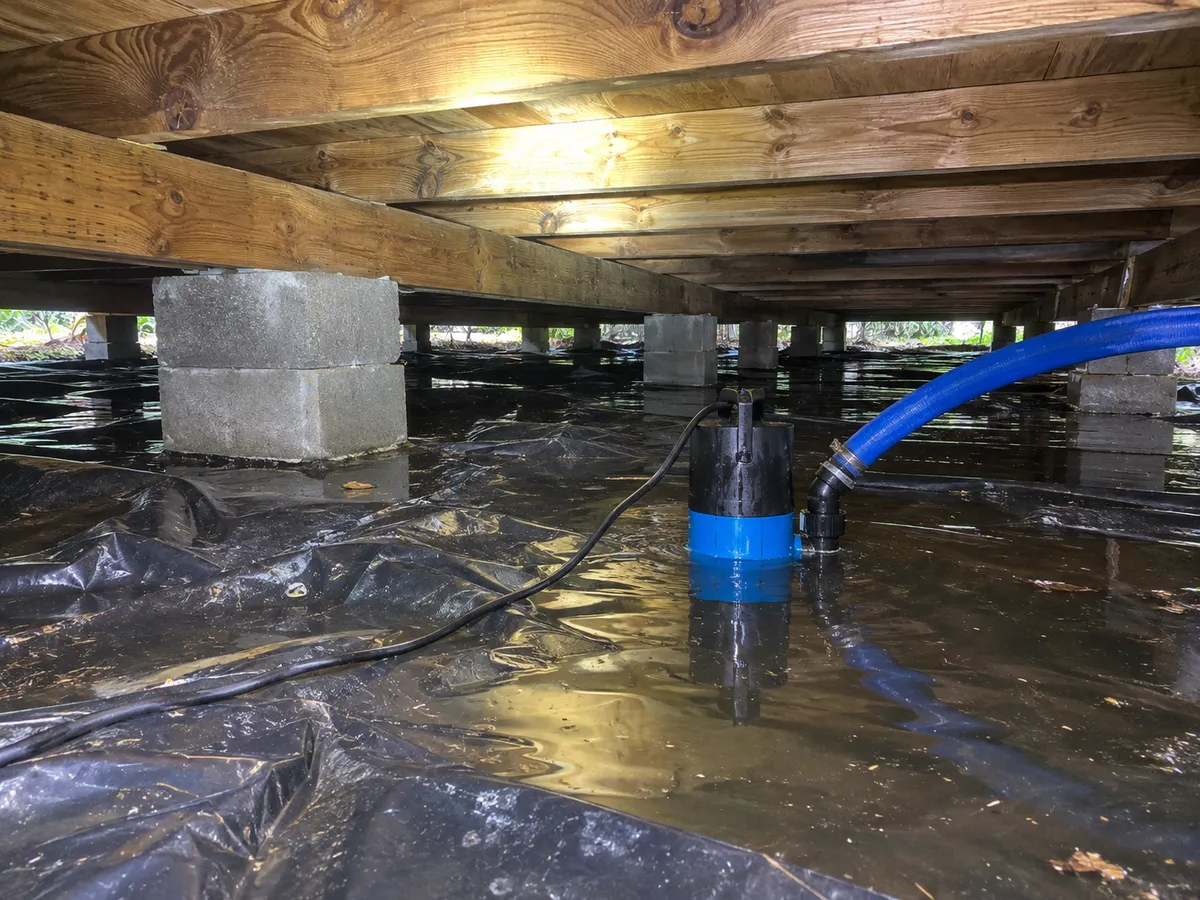
Crawl space water removal usually means a submersible pump for standing water, removal of wet insulation and torn vapor barrier, then dehumidifiers and air movers under the house. The EPA target of indoor humidity below 60 percent applies under the floor too[EPA].
Step by step
- Find the source. Plumbing leak, drain line or surface water.
- Pump out. Submersible pump clears standing water.
- Remove wet materials. Insulation and vapor barrier that will not dry.
- Dry under the house. Dehumidifiers until readings show dry.
Do
- Turn off water if a plumbing leak is the source.
- Keep the crawl space access closed between visits.
Avoid
- Crawling into standing water near wiring[CDC].
- Leaving wet insulation hanging on the joists.
Crawl space water removal and Houston homes
Housing here skews older: 47% of homes in the city of Houston were built before 1980, and the median year built is 1982[U.S. Census Bureau]. Older supply lines, drain lines and water heaters are common sources of leaks.
Harvey’s storm total at the 1 NE Houston/Hobby Airport gauge was 37.01 inches, measured August 25 to 31, 2017[NWS Houston/Galveston].
More in Houston
- Emergency water removal in Houston
- Water extraction in Houston
- Water mitigation in Houston
- Water damage cleanup in Houston
- Flood restoration in Houston
- Flood cleanup in Houston
- Sewage cleanup in Houston
- Burst pipe water damage in Houston
- Water damage restoration in Houston
Crawl space water removal nearby
- Crawl space water removal in Pearland
- Crawl space water removal in Spring
- Crawl space water removal in Rosharon
General guide: crawl space water removal explained.