Restoring a Houston home after rising water
The IICRC lists rising water from rivers or streams as an example of Category 3 water, while storm water is not automatically Category 3; the restorer decides after inspecting[IICRC 2026 position statement]. Either way, floodwater calls for protective gear and removal of materials it soaked.
FEMA’s guidance is to document the damage, stay away from wet electrical equipment, and take out wet drywall and insulation[FEMA]. Flood restoration in Houston follows that order: safety, photos, removal, cleaning, drying.
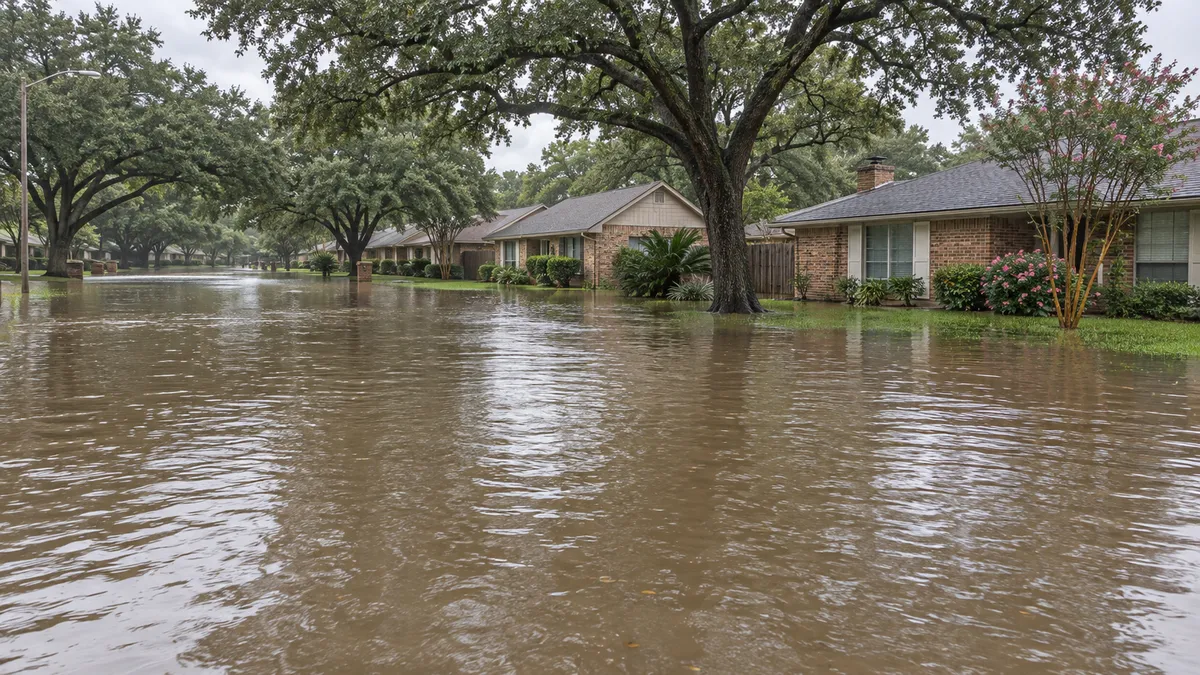
How the job usually runs
- Wait for safe entry. Do not go back in until officials say it is safe[FEMA].
- Document. Photos and video of every room.
- Remove. Wet drywall, insulation and flooring come out.
- Clean and dry. Surfaces cleaned, then dried to verified readings.
Do
- Wear rubber boots and gloves[CDC].
- Keep children and pets out of flooded rooms.
Flood restoration and Houston homes
Harvey’s storm total at the 1 NE Houston/Hobby Airport gauge was 37.01 inches, measured August 25 to 31, 2017[NWS Houston/Galveston].
Any address in Houston can be checked against the FEMA flood map[FEMA Flood Map Service Center]. Harris County homeowners can also use the Flood Control District’s Flood Education Mapping Tool, which shows mapped floodplains relative to homes[Harris County Flood Education Mapping Tool].
More in Houston
- Emergency water removal in Houston
- Water extraction in Houston
- Water mitigation in Houston
- Water damage cleanup in Houston
- Flood cleanup in Houston
- Sewage cleanup in Houston
- Burst pipe water damage in Houston
- Crawl space water removal in Houston
- Water damage restoration in Houston
Flood restoration nearby
General guide: flood restoration explained.