How water extraction works in Houston
Water extraction is the mechanical part of the job: truck-mounted or portable units pull water out of carpet, pad and hard floors so drying equipment can work. In Houston, extraction usually happens on the first visit, right after the source is shut off.
After extraction, soaked pad usually comes out and the carpet is floated or lifted so air can reach the slab. Whatever stays in the house needs to be dry within 24 to 48 hours, per EPA guidance[EPA].
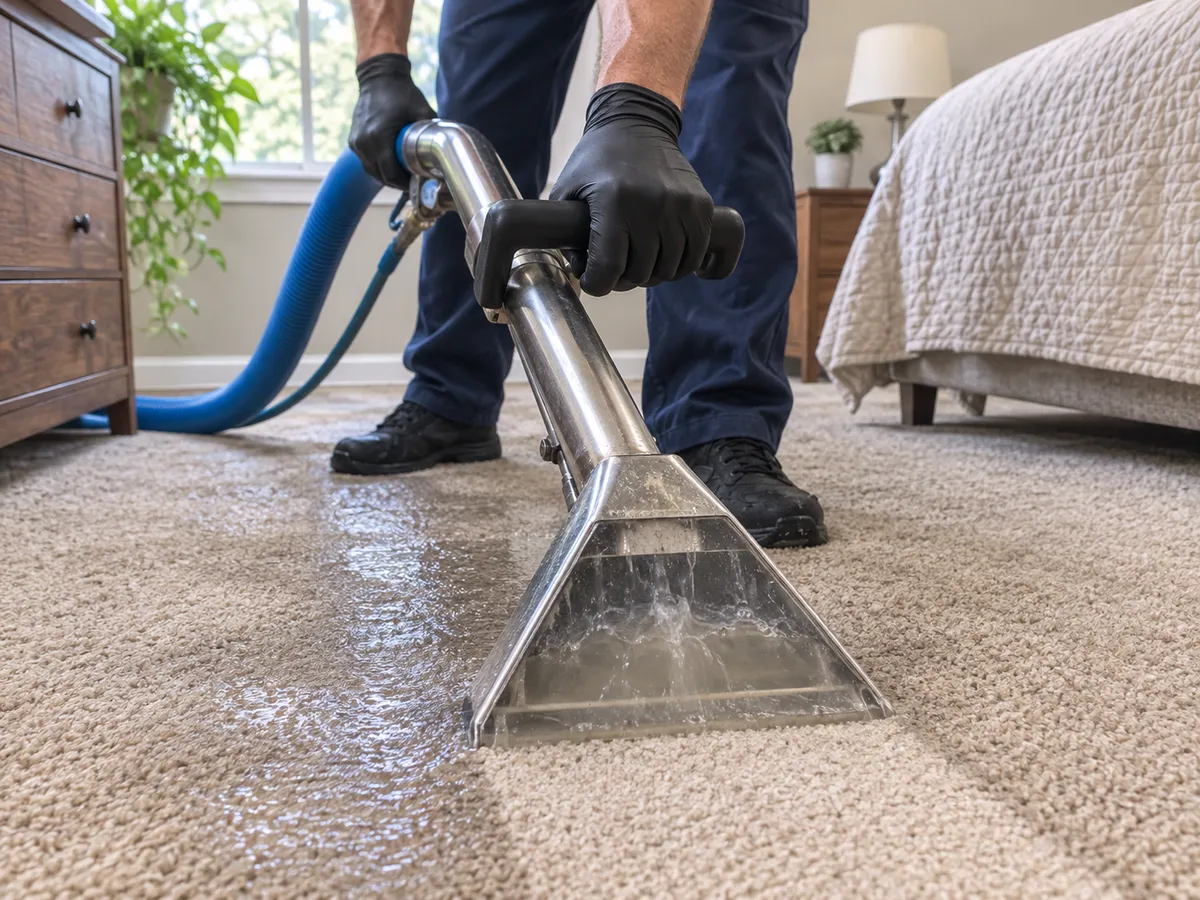
How the job usually runs
- Source off. Water shut off at the main or fixture.
- Extract. Carpet, pad and hard floors extracted until little water comes up.
- Pull pad if needed. Soaked pad is removed so the slab can dry.
- Dry and measure. Equipment runs until readings show dry.
Do
- Keep foot traffic off wet carpet.
- Move rugs and loose items off wet floors.
Avoid
- Leaving wet rugs folded on the floor.
- Running the heat to “dry things out” with doors closed.
Water extraction and Houston homes
In the city of Houston, 43% of the 1,040,576 housing units are detached single-family homes, and owners live in 42% of occupied units[U.S. Census Bureau].
Housing here skews older: 47% of homes in the city of Houston were built before 1980, and the median year built is 1982[U.S. Census Bureau]. Older supply lines, drain lines and water heaters are common sources of leaks.
More in Houston
- Emergency water removal in Houston
- Water mitigation in Houston
- Water damage cleanup in Houston
- Flood restoration in Houston
- Flood cleanup in Houston
- Sewage cleanup in Houston
- Burst pipe water damage in Houston
- Crawl space water removal in Houston
- Water damage restoration in Houston
Water extraction nearby
General guide: water extraction explained.